Research Topics
Optical Photonics
Optics and photonics is a discipline that encompasses research and applications based on the use of photons instead of electrons. Processing information with photons enables data transmission at the speed of light and with high bandwidth. Integrated photonic devices are designed for photon manipulation at the chip level. Communication, lighting, energy, sensors, biomedical, and military applications are among the main research areas of photonics. As a result of the interaction of photons with artificially designed media, many unconventional properties that were previously unattainable have emerged. Negative refraction of light, optical invisibility cloaks, and slow light are among these phenomena. The Nanophotonics Research Group conducts research on silicon photonics, photonic crystals, biochemical sensors, slow light, GRIN optics, solar cells, lighting, and renewable energy.
Related Research Laboratories:
- Nanophotonics Research Laboratory
Related Projects:
- “Design of Dielectric Structures with Graded Refractive Index and Their Photonic Applications,” TÜBİTAK 1001 Project, 2011–2014, Budget: 353,079 TRY.
- “Slowing Down the Speed of Photons Using Photonic Crystal Waveguides,” TÜBİTAK 3501 Career Project, 2009–2011, Budget: 84,182 TRY.
- TÜBİTAK 1001 Project, 115R036, Title: “Numerical and Experimental Analysis of Periodic and Quasi-Periodic Photonic Structures with Low Symmetry,” Duration: 2015–2018, Project Leader: Hamza Kurt, Budget: 517,650 TRY.
- NATO Project: SPS MYP G5048, Title: Nanostructures for Highly Efficient Infrared Detection, Duration: 2015–2018, Project Leader: Prof. Kestutis Staliunas (Spain), Project Partners: Prof. Hamza Kurt (Türkiye), Prof. Vygantas Mizeikis (Japan), Prof. Saulius Juodkazis (Australia), Prof. Mangirdas Malinauskas (Lithuania), Total Budget: €416,950.
- Prof. Dr. Hamza Kurt
- ELE 451: Optik
- ELE 452: Fotonik
- ELE 453: Optik Haberleşme
- ELE 454: Opto-Elektronik
- ELE 457: Güneş Enerji Sistemleri
Radar Systems and Imaging
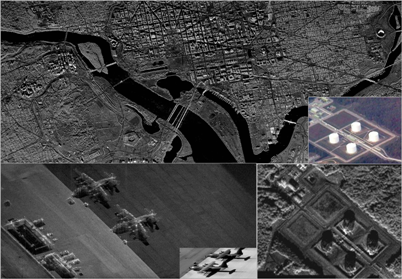
Radar is a sensor that detects targets using electromagnetic waves and enables target detection, imaging, and tracking remotely, regardless of weather conditions, day or night, and even in the presence of obstacles. In our department, active research is conducted in the field of radar. In particular, projects on synthetic aperture radar, underground and through-the-wall radar imaging, and radar-based human sensing are actively carried out with the collaboration and support of the defense industry and TÜBİTAK.
Related Research Laboratories:
- Radar Systems Research Laboratory
Related Projects:
- Compressive Data Acquisition and Processing Techniques for Sensing Applications (COMPSENSE), Budget: €75,000, European Union, Duration: 2010–2013.
- Underground Imaging Radar Prototype Study, Budget: 100,000 TRY, Funding Agency: Ministry of Industry, Duration: 2011–2012.
- Dr. Öğr. Üyesi Harun Taha Hayvacı
- ELE 371: Sinyaller ve Sistemler
- ELE 432: Antenler ve Yayılım
- ELE 465: Radar Sinyal İşleme Temelleri
- ELE 471: Sezim ve Kestirim Kuramı
- ELE 473: Sayısal Görüntü İşleme
- ELE 474: Sayısal Sinyal İşleme
- ELE 475: Uzamsal Dizilim Sinyal İşleme
Analog and Digital Electronics
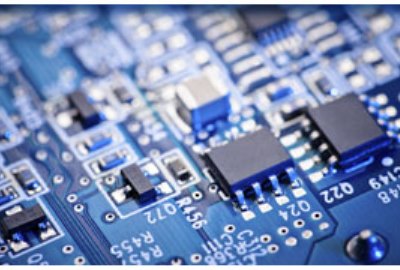
Electronic circuits form the infrastructure of virtually all technological products. All computers, communication systems, imaging devices, and audio and video equipment operate on electronic circuits. Electronic circuits are traditionally divided into two categories: digital electronic circuits and analog electronic circuits. Digital electronic circuits are used in computers and similar devices, and more generally in all environments where information is stored or transmitted in digital form, that is, as bits. Although we live in a digital world, digital information expressed as ones and zeros must ultimately be converted into other forms. This conversion is achieved through analog electronic circuits.
Related Projects:
- “Optimization of Phases Applied to Transducer Array Elements for High-Intensity Focused Ultrasound (HIFU) and Ultrasound Beam Formation Using Tissue Information Extracted from Magnetic Resonance (MR) Images,” TÜBİTAK 1001 Project, 2011–2014, Budget: 360,000 TRY.
- “Portable Low-Cost Wireless Ultrasound Device,” TÜBİTAK 1003 Project, 2013–2016, Budget: 480,000 TRY.
- “Intracatheter Focused Ultrasound System,” TÜBİTAK 1001 Project, 2012–2015, Budget: 360,000 TRY.
- Doç. Dr. Arif Sanlı Ergün
- ELE 421: Yarı İletken Devre Teknolojisi
- ELE 422: CMOS VLSI Tasarımı
- ELE 430: Doğrusal Olmayan Haberleşme Elektroniği
- ELE 431: Mikrodalga Elektroniği
- ELE 442: Tıbbi Görüntüleme Sistemleri
Superconducting Electronics
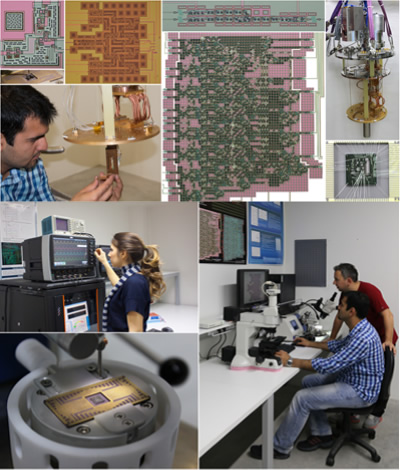
The use of superconducting materials in electronic circuits has been a long-sought development since their discovery, as it enables energy transmission without power loss and allows electrons to reach extremely high speeds. Superconductors have been studied for decades; however, the development of digital circuits and processor units using superconducting materials is a field pursued in Türkiye only at TOBB University of Economics and Technology, and worldwide only at a limited number of research institutions in the United States and Japan.
Related Research Laboratories:
- Superconducting Laboratory
Related Projects:
- “Establishment of a 10×10 Superconducting Monolithic Imaging Array Using Improved Standard Fabrication Processes for SFQ Circuits,” TÜBİTAK Project, 2014–2017, Budget: 359,288 TRY.
- “Development of an RSFQ-Based Integrated Circuit Design Tool and Arithmetic Logic Unit,” TÜBİTAK Project, 2012–2015, Budget: 358,783 TRY.
- “Establishment of the Superconductivity Central Laboratory,” Republic of Türkiye Ministry of Development, 2010–2013, Budget: 9,250,000 TRY.
- “Linac–LHC Based eP, gammaP, eA, and gammaA Colliders,” TAEK Project, 2008–2011, Budget: 215,000 TRY.
- “Design and Characterization of an RSFQ-Based Analog-to-Digital Converter,” TÜBİTAK Project, 2009–2011, Budget: 239,173 TRY.
- Doç. Dr. Ali Bozbey
- ELE 421: Yarı İletken Devre Teknolojisi
- ELE 422: CMOS VLSI Tasarımı
- ELE 428: Süperiletken Elektroniği I
- ELE 429: Süperiletken Elektroniği II
Automatic Control
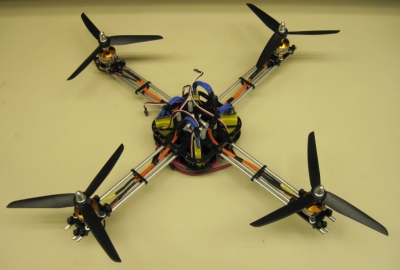
Control systems are systems that maintain a connected system at desired levels without human intervention. Today, control systems are widely used in many fields. They are encountered in automobiles, aircraft, climate control, heating, and ventilation systems used in buildings, as well as in ships, robots, traffic control systems, and countless other applications.
Related Projects:
- “Modeling and Control Approaches for Flow Control,” TÜBİTAK Project, 2010–2013, Budget: 85,000 TRY.
- “FLOCON: Flow Control,” EU FP7 Project, 2010–2014, Budget: €100,000.
- “National Automatic Meteorological Observation Station (MOMGİ),” Project Status: Under Evaluation, Funding Agency: TÜBİTAK, Budget: 2,500,000 TRY.
- Prof. Dr. Coşku Kasnakoğlu
- ELE 301 Kontrol Sistemleri
- ELE 301 Kontrol Sistemleri Laboratuvarı
- ELE 401/501 Doğrusal Sistemler
- ELE 402/502 Optimal Kontrol
- ELE 403/503 Doğrusal Olmayan Sistemler
- ELE 404/504 Dijital Kontrol Sistemleri
- ELE 405/505 Endüstiriyel Kontrol Sistemleri
- ELE 411/511 Robotik
- ELE 412/512 Mekatronik Sistem Tasarımı
- ELE 416/516 Akıllı Sistemleri
- ELE 508 Uyarlamalı Kontrol
- ELE 515 MATLAB ile Bilgisayarlı Kontrol
Wireless Communications
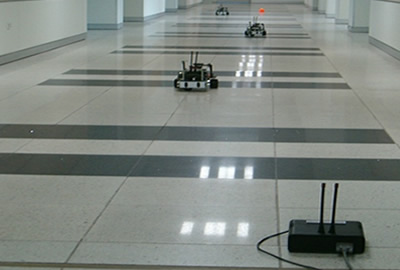
Wireless communication is a rapidly developing technology with applications including broadband radio, satellite communications, military networks, GPS, mobile phone technologies, wireless local area networks (IEEE 802.11), sensor networks, and many others. It is a major industrial sector with an annual market valued at hundreds of billions of dollars. At TOBB University of Economics and Technology, the Communications Systems group within the Department of Electrical and Electronics Engineering consists of experienced researchers in the field. This group, which serves as the principal investigator for numerous projects, receives support from institutions such as TÜBİTAK, the Ministry of Science, Industry and Technology, the Turkish Academy of Sciences, and ASELSAN A.Ş.
Related Projects:
- “OFDM-Based Resource Allocation in Cooperative Wireless Communications,” TÜBİTAK 1001 Project, 2009–2011, Budget: 163,354 TRY.
- “Routing in Wireless Networks Using Rateless Codes,” TÜBİTAK 3501 Career Project, 2011–2013, Budget: 128,000 TRY.
- “Development of Alternative High-Speed Waveform Solutions,” ASELSAN Project, January–August 2012, Budget: 28,800 TRY.
- “Use of Rateless Codes in APCO Radio Systems,” San-Tez and ASELSAN Project, 2012–2014, Budget: 76,000 TRY.
- “Distributed Frequency Allocation and Routing in Frequency-Hopping Ad Hoc Networks,” San-Tez and ASELSAN Project, 2013–2015, Budget: 98,000 TRY.
- “Fundamental Methods for Next-Generation Downlink Transmission Systems,” TÜBİTAK 3501 Career Project, 2012–2015, Budget: 156,000 TRY.
- “Multilayer Transmission for High-Speed Military Communications,” San-Tez and ASELSAN Project, 2012–2014, Budget: 114,141 TRY.
- “Compressive Sensing–Based Energy-Efficient Communications for Wireless Sensor Networks,” Türk Telekom Project, 2013–2014, Budget: 66,000 TRY.
- Doç. Dr. Ayşe Melda Yüksel Turgut
- Doç. Dr. Tolga Girici
- Prof. Dr. Bülent Tavlı
Remote Sensing
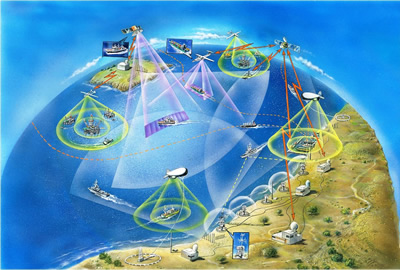
Remote sensing is a broad field that aims to extract desired information about an observed environment using data obtained from sensing devices. It analyzes the use of a wide range of sensor types—such as optical cameras, acoustic, seismic, infrared, magnetic, hyperspectral, and radar sensors—across systems ranging from close-range platforms to satellite systems. Remote sensing has numerous application areas, including defense industry, security, and environmental monitoring. The Department of Electrical and Electronics Engineering conducts active research projects in this field through ongoing projects and collaborations with institutions such as TÜBİTAK Space.
Related Projects:
- “Cognitive and Cooperative Signal Processing Technologies for Remote Sensing Applications,” European Union Project, 2011–2014, Budget: €75,000.
- “Compressed Remote Sensing and Imaging,” TÜBİTAK Project.
- ELE 371: Sinyaller ve Sistemler
- ELE 432: Antenler ve Yayılım
- ELE 465: Radar Sinyal İşleme Temelleri
- ELE 471: Sezim ve Kestirim Kuramı
- ELE 473: Sayısal Görüntü İşleme
- ELE 474: Sayısal Sinyal İşleme
- ELE 475: Uzamsal Dizilim Sinyal İşleme
Ultrasound
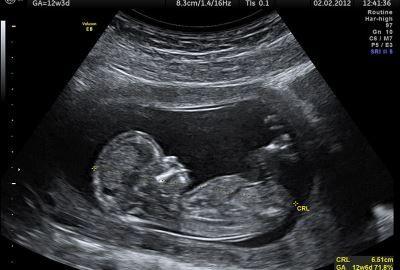
Ultrasound is defined as sound waves at frequencies that cannot be heard by the human ear. The use of ultrasound by humans dates back to the 19th century. The construction of the first device capable of generating ultrasound in the late 19th century and the discovery of the piezoelectric effect by the Curie brothers—where asymmetric crystals produce mechanical vibrations when excited by an electrical signal and generate an electrical signal when subjected to mechanical force—can be considered the beginning of ultrasound technology. The first application area of ultrasound was underwater. Sonar studies that began during World War I gained significant momentum during World War II and have since become the primary means of perception for underwater vehicles.
The use of ultrasound in medicine began in the 1950s. Scientists who realized that the imaging capability used underwater could also be applied to the human body, which consists largely of water, developed the first imaging systems in the 1950s. These early systems, which operated in a water tank, were not very practical. With the development of integrated circuit technology in the 1970s, modern ultrasound systems replaced them. Today, ultrasound imaging is the only real-time imaging modality that causes minimal harm. Over the past 10–20 years, the therapeutic effects of ultrasound have also begun to be utilized. When applied at high intensities, ultrasound can locally heat and ablate tissue, enabling its use in the treatment of certain diseases.
Related Projects:
- “High-Intensity Focused Ultrasound (HIFU) Frequency Optimization and Ultrasound Beam Formation,” TÜBİTAK 1001 Project, 2011–2014, Budget: 352,170 TRY.
- “Intracatheter Focused Ultrasound System,” TÜBİTAK 1001 Project, 2012–2015, Budget: 360,000 TRY.
- “Portable Low-Cost Wireless Ultrasound Device,” TÜBİTAK 1003 Project, 2013–2016, Budget: 480,000 TRY.
- Doç. Dr. Arif Sanlı Ergün
- ELE 441/541: Biyomedikal Mühendisliği
- ELE 442/542: Tıbbi Görüntüleme
- ELE 443/543: Akustik Dalgalar ve Aygıtlar
- ELE 444/544: Ultrasonik Görüntüleme